What people often notice
- Heel pain with the first steps after rest
- Pain after longer periods of standing or walking
- Tenderness under or toward the inside of the heel
- Symptoms that ease as you warm up, then return later

Persistent heel pain can make the first steps in the morning, standing and walking difficult. Shockwave may be considered when symptoms have not improved as expected with other care.
Book an assessment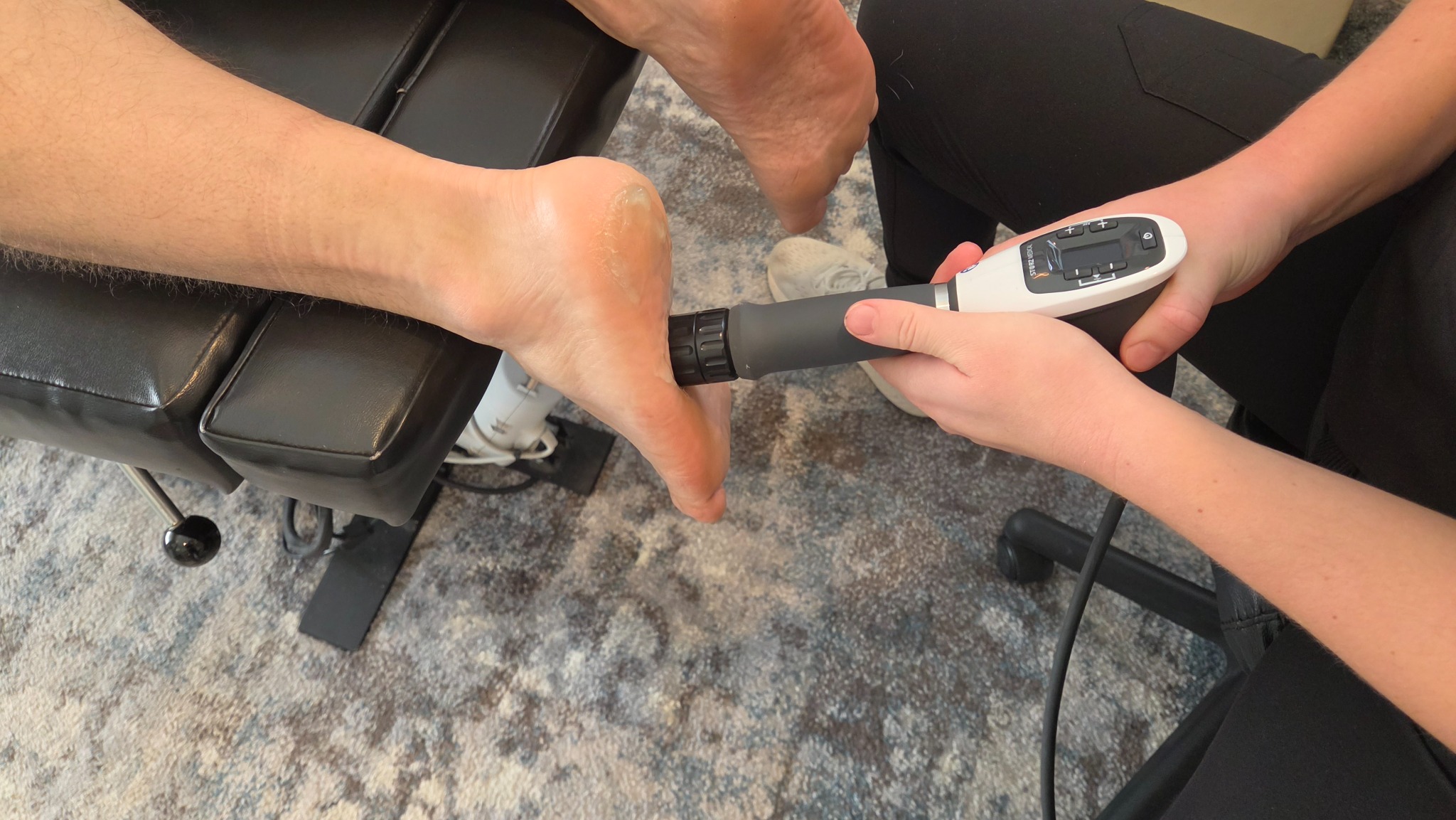 Pain under the heel
Plantar fasciitis, also called plantar fasciopathy, commonly causes pain where the strong band of tissue under the foot meets the heel. Shockwave may be considered when symptoms have persisted despite changes to footwear, activity, mobility or strengthening.
A thorough assessment helps us confirm the source of your heel pain and build a focused treatment plan around your comfort, movement and goals.
Read the supporting research: 2024 systematic review and meta analysis ↗