01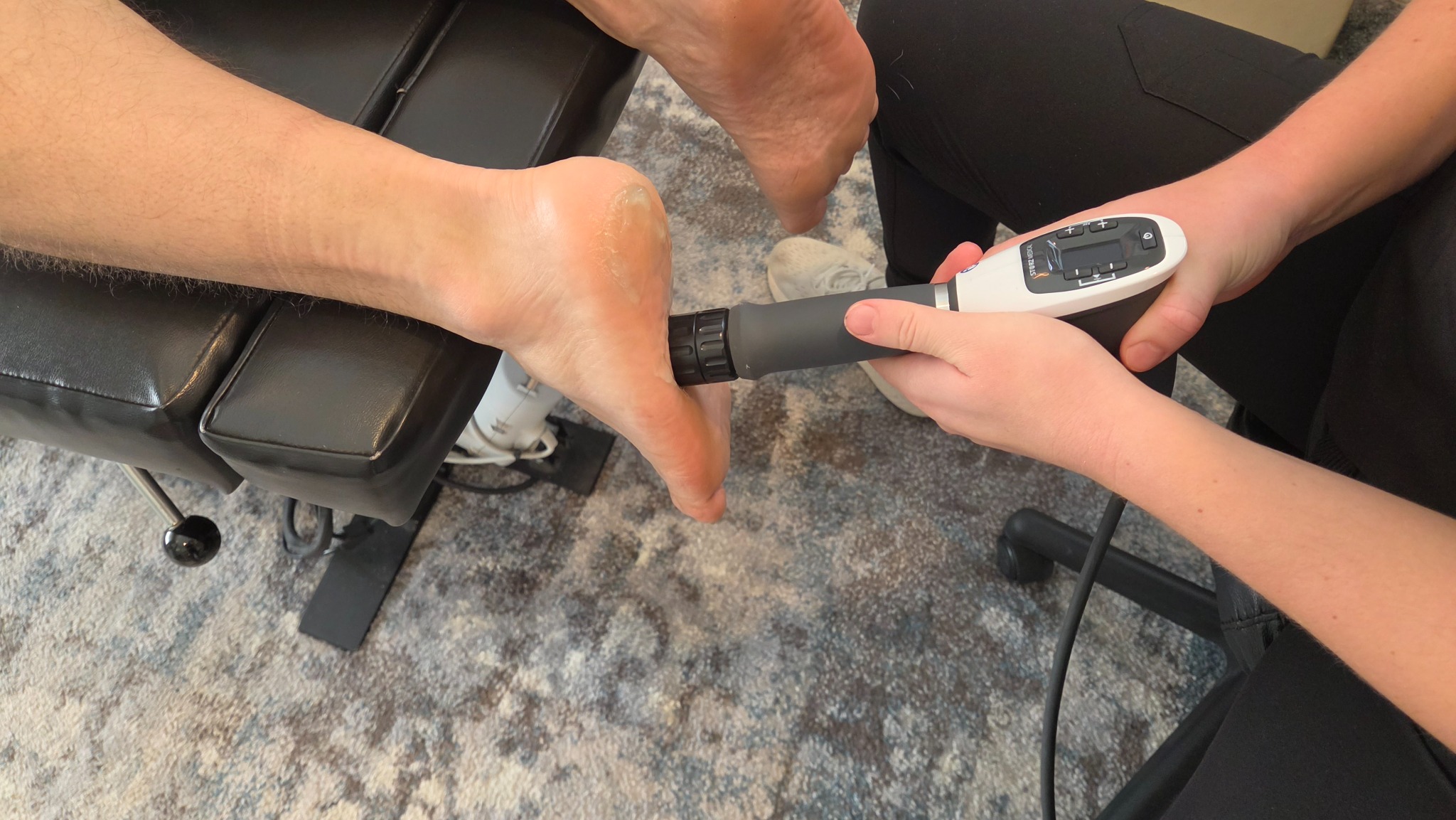
Heel & plantar fasciaPlantar Fasciitis
Often considered when heel pain lingers despite footwear changes, activity modification, stretching or strengthening.
Focused, non invasive care for persistent pain that has not responded as hoped. Explore what shockwave treats, what a session feels like, and whether it fits your recovery plan.
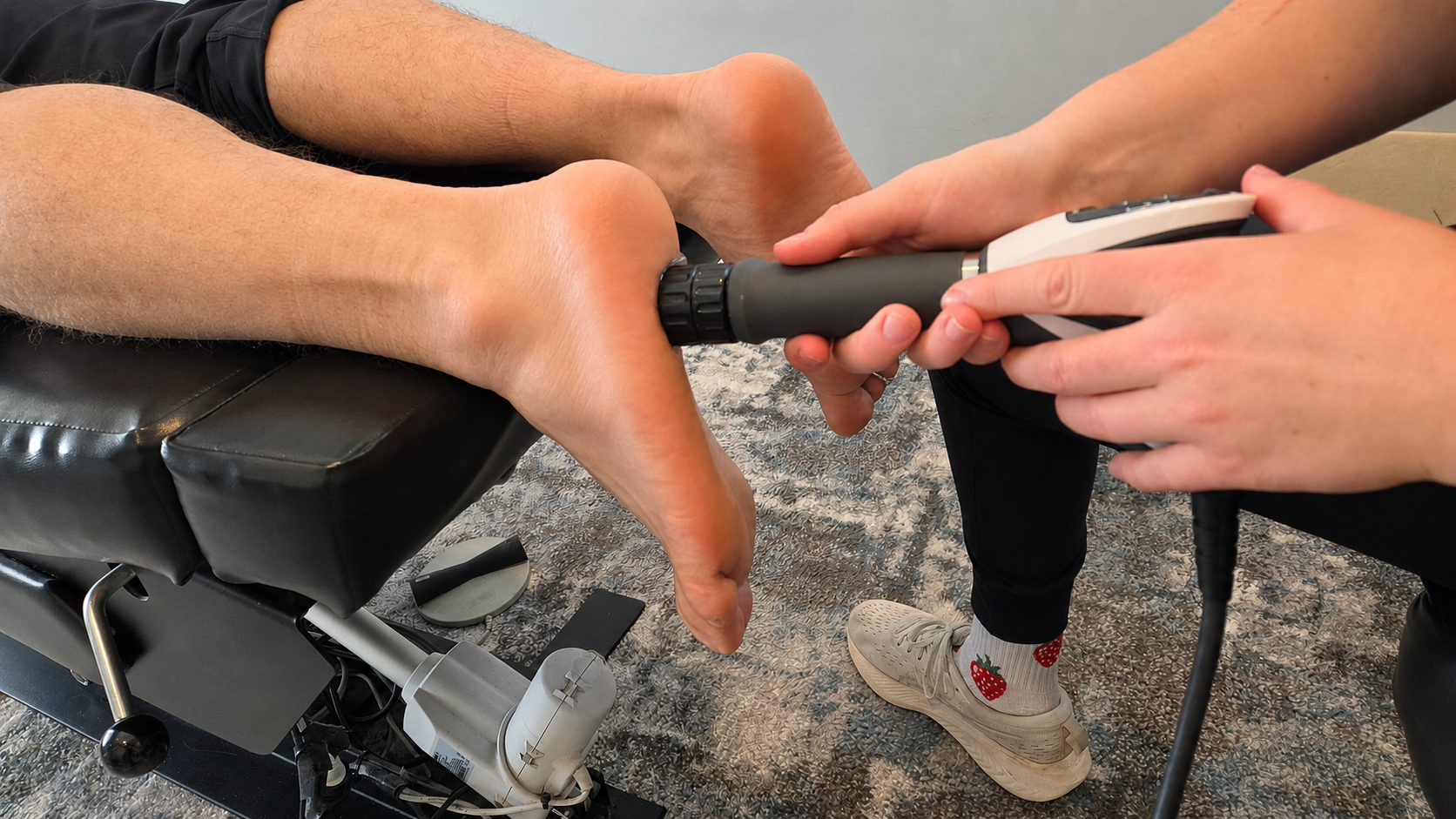
Shockwave uses mechanical pressure waves at a carefully selected intensity. It is not appropriate for every condition and is most often considered for persistent tendon or muscle related problems after a thorough assessment.
Often considered when heel pain lingers despite footwear changes, activity modification, stretching or strengthening.
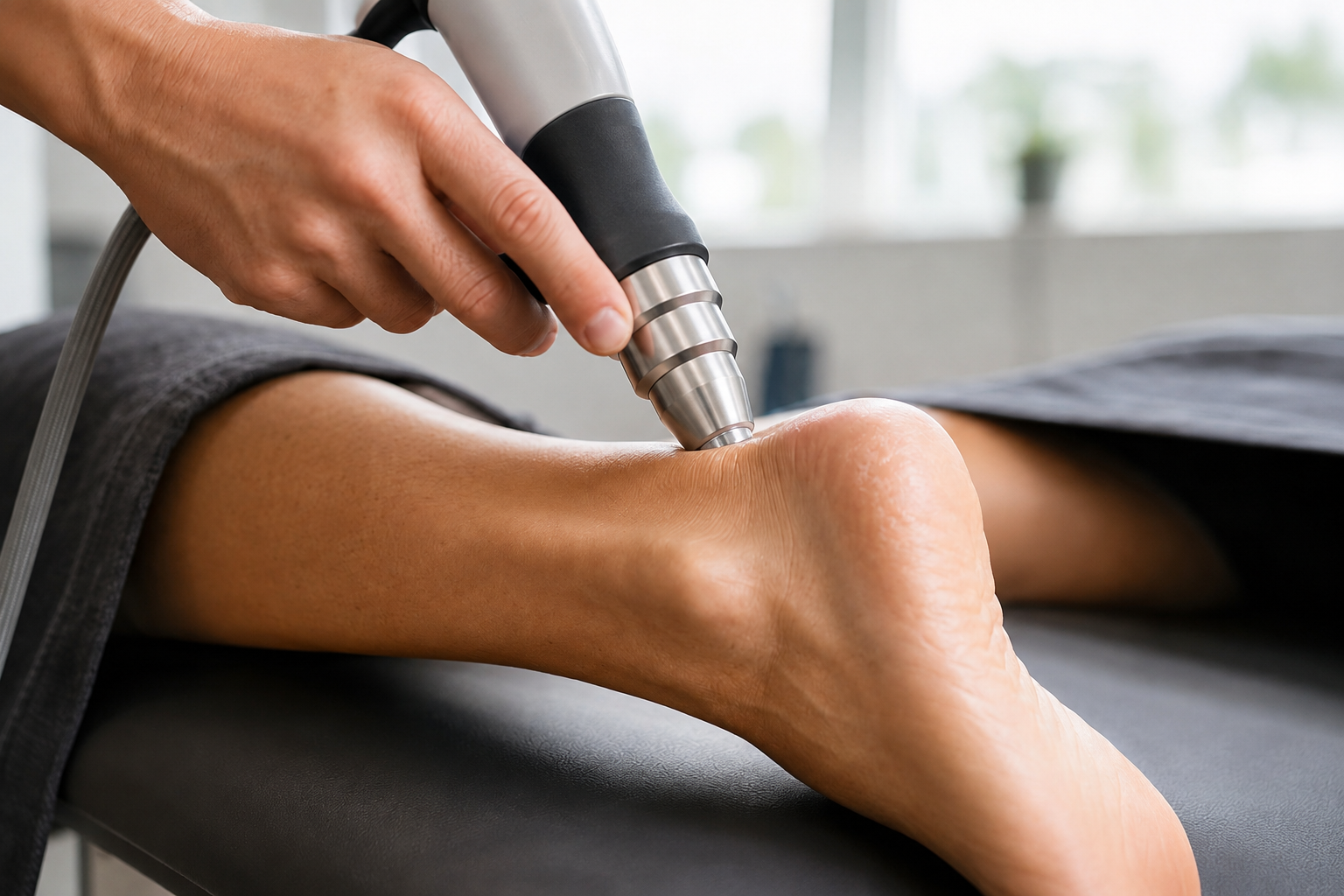
May be used for persistent Achilles tendinopathy as part of a progressive loading plan.
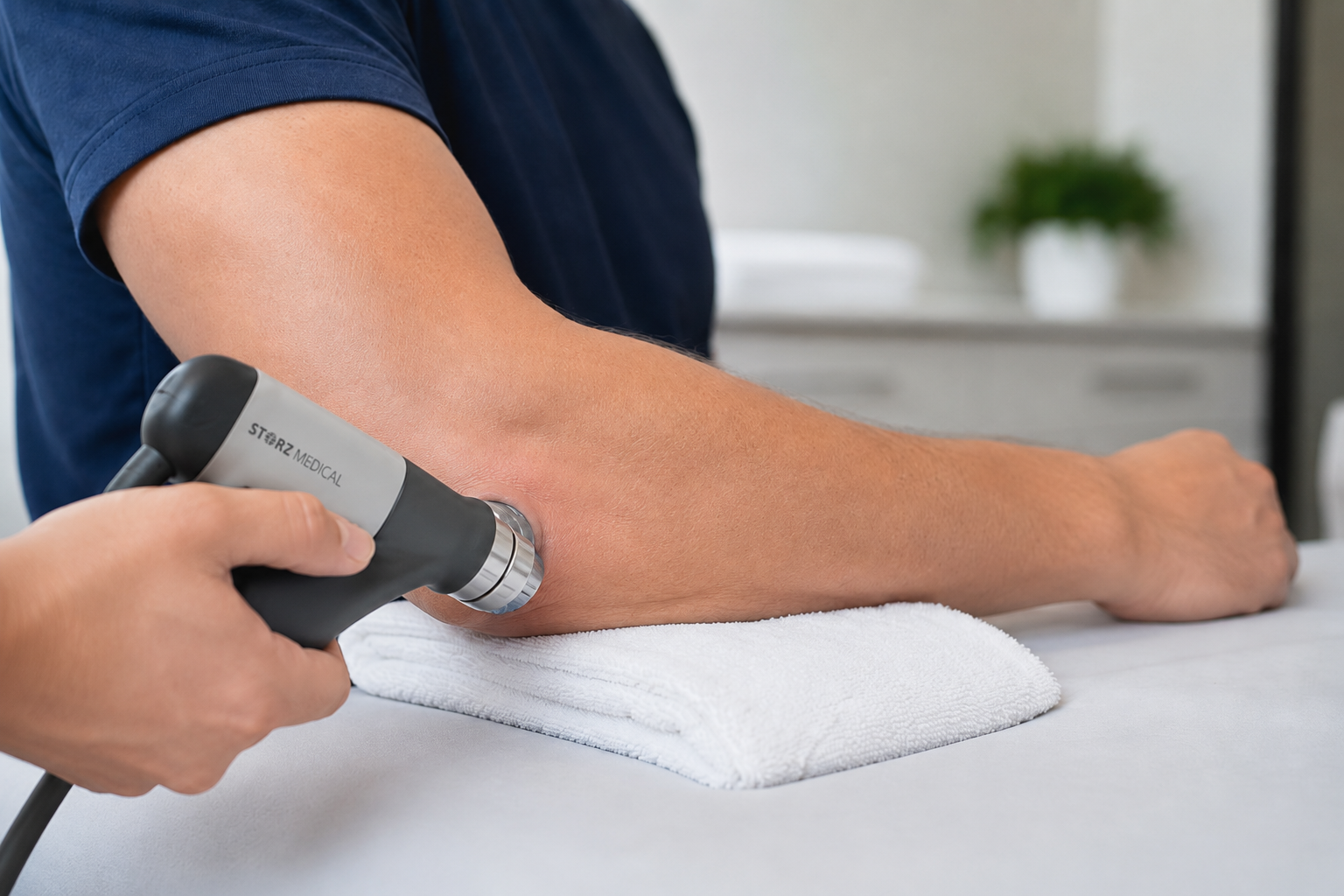
Targets the irritated tendon attachment when gripping, lifting and racquet sports remain painful.
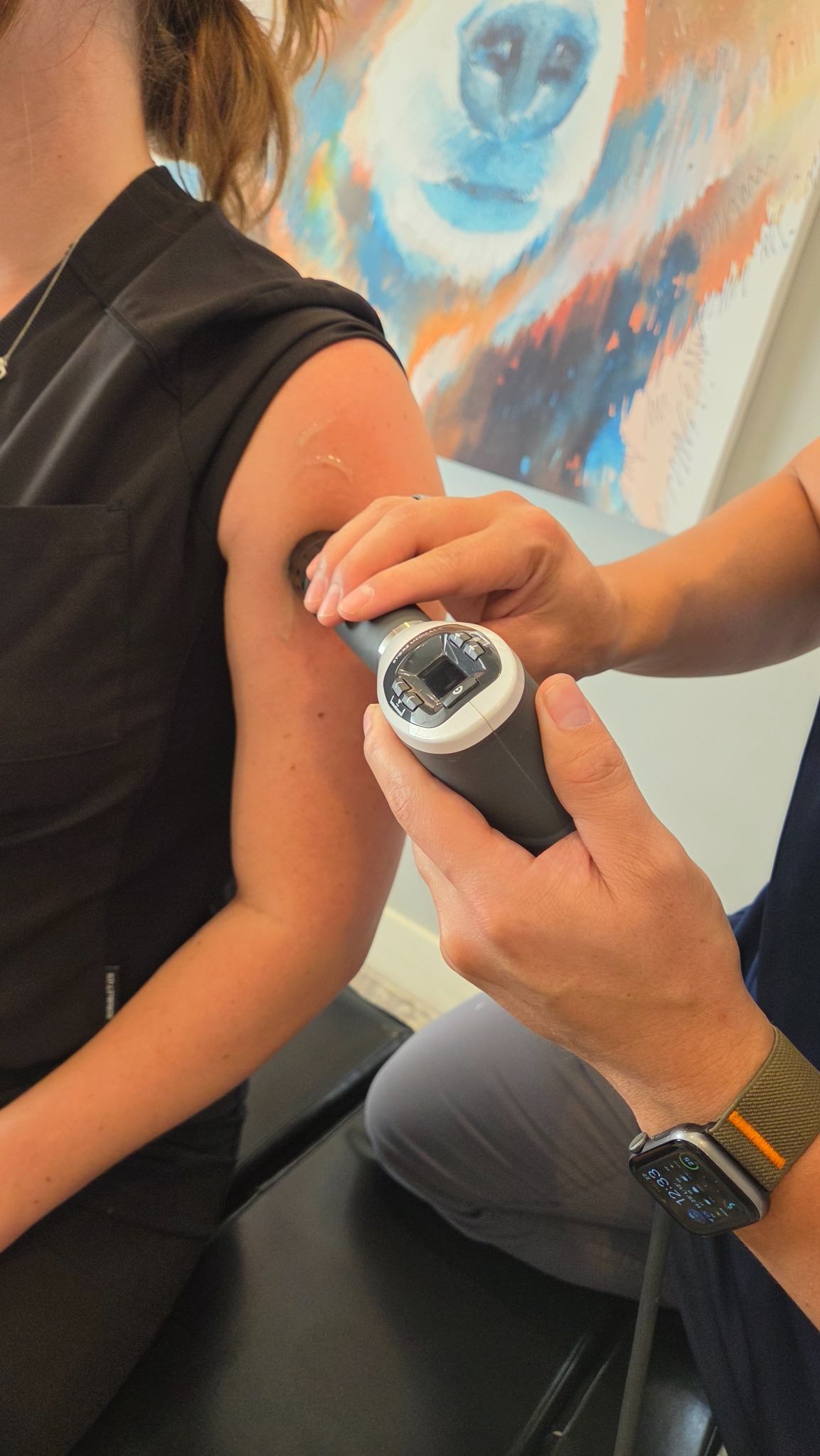
Most often discussed for calcific rotator cuff tendinopathy. Diagnosis and device type influence the plan.
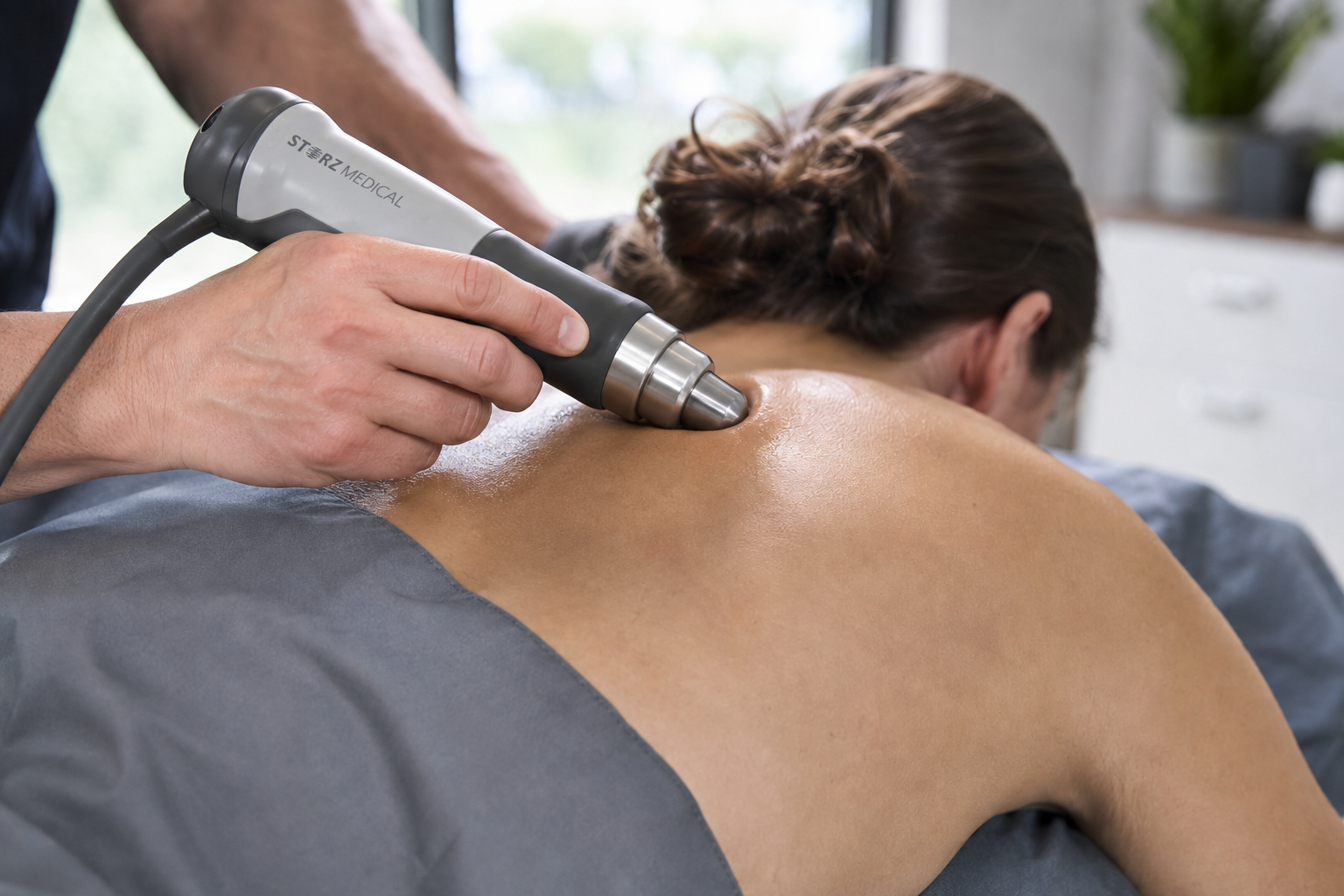
May help selected areas of persistent muscle tension around the shoulders and between the shoulder blades.
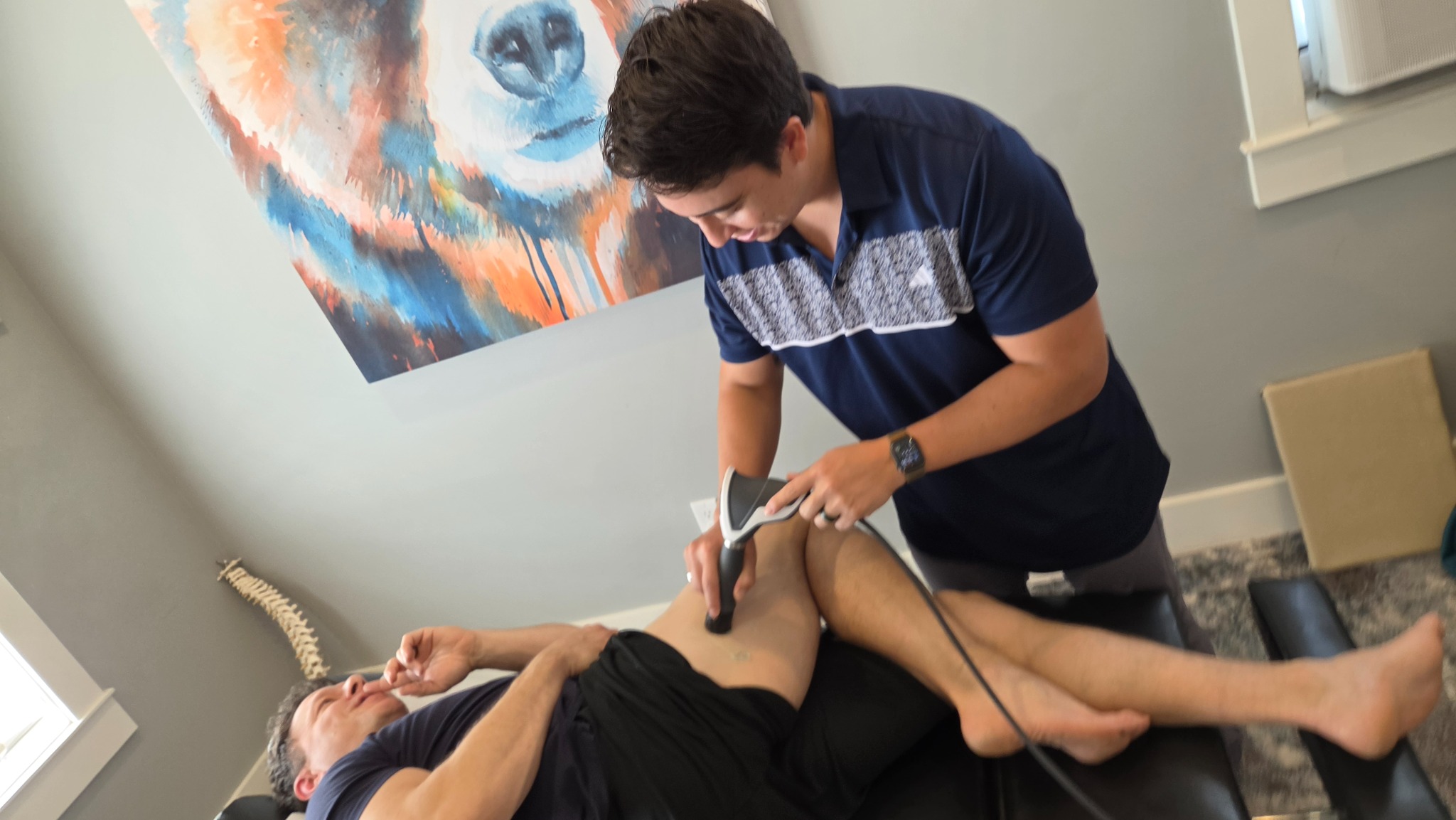
Can be considered for greater trochanteric pain syndrome, usually alongside hip strengthening.
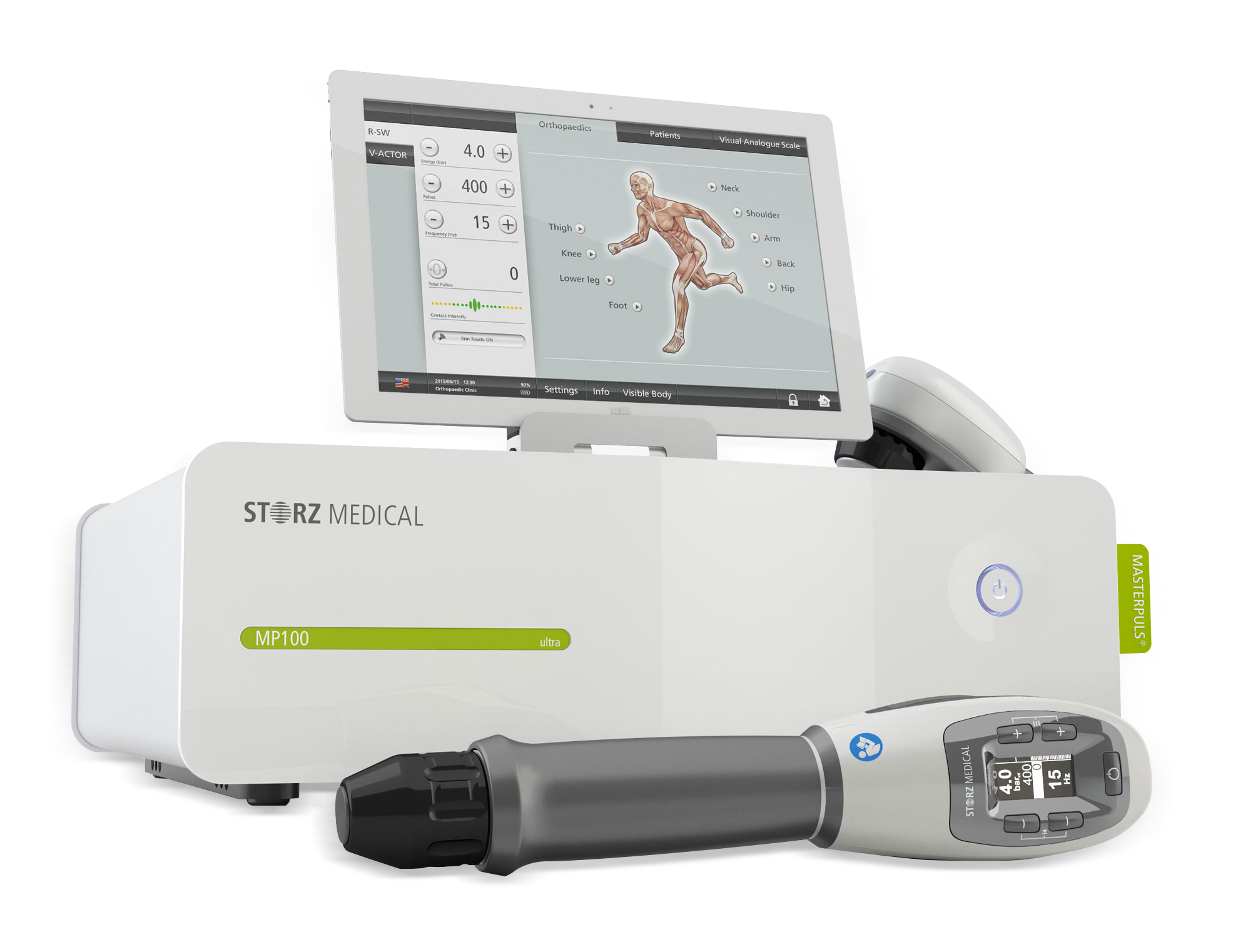
Our clinic uses the Swiss made STORZ Medical MASTERPULS MP100 Ultra, a compact radial pressure wave system designed for musculoskeletal care.
AdjustablePressure, pulse rate, treatment head and total pulses can be adapted for the tissue and your comfort.
TargetedA handheld applicator and a small amount of gel deliver pressure waves to the treatment area.
QuickThe active treatment usually takes only several minutes within a short appointment.
We review your history, examine the painful area and complete a safety screen.
Gel is applied, the tender tissue is located and intensity is gradually adjusted. You give feedback throughout.
Many plans use 3 to 6 sessions, often about one week apart. Your plan may differ.
Mild soreness is possible for a day or two. Activity advice and specific exercises often support recovery.
We can direct bill many extended health benefit plans. Coverage varies, so please check the details of your individual policy.
Your initial shockwave therapy visit.
For each follow up shockwave therapy visit.
Most people describe rapid tapping, pressure, or a deep pulsing sensation. Tender tissue may feel more intense, but the clinician can adjust the pressure and pace throughout treatment based on your feedback.
The most useful answer comes from matching treatment to your diagnosis, health history, needs and goals.
Shockwave Therapy, also known as Extracorporeal Shockwave Therapy or ESWT, is a non invasive treatment that uses acoustic pressure waves to stimulate healing in injured tendons, ligaments and muscles. It promotes circulation, reduces pain signalling and helps remodel unhealthy tissue without injections or surgery.
Common treatment areas include plantar fasciitis and heel pain, Achilles tendinopathy, tennis and golfer’s elbow, patellar tendinopathy, rotator cuff and calcific shoulder pain, hip and gluteal tendinopathy, and selected chronic muscle strains or trigger points. An assessment helps determine whether your specific condition is a good fit.
A handheld device delivers controlled pressure waves to the injured area. These waves stimulate circulation and cell activity, support tissue remodelling and may help reduce pain signalling. The settings and treatment head are adjusted for the tissue being treated and your comfort.
Most people describe the sensation as firm tapping, pressure or deep pulsing. Tender areas may feel more intense, but the clinician can adjust the intensity throughout treatment. Temporary soreness can occur and usually fades within 24 to 48 hours.
Many treatment plans involve 3 to 6 sessions spaced about 5 to 10 days apart. Some people notice improvement after the first few visits, while others improve gradually over several weeks. Your plan and response may differ.
Treatment typically takes 10 to 15 minutes. Most people can return to normal daily activities right away, although we may recommend temporarily modifying heavy loading of the treated area.
Shockwave Therapy is non invasive and is generally considered safe when provided by a trained clinician after an appropriate assessment. It does not require anesthesia or medication.
Possible side effects are usually mild and temporary. They can include redness, swelling, bruising, tenderness or soreness around the treatment area.
Shockwave is not used over open wounds, active infections, suspected fractures or tumours. Pregnancy, bleeding disorders, reduced sensation, blood thinning medication and implanted devices near the treatment area require individual review. Your clinician will complete a safety screen before treatment.
Usually yes, with appropriate modifications. Light activity is often encouraged, while heavy or painful loading of the treated area may need to be adjusted for 24 to 48 hours. We will guide you on suitable progressions.
Shockwave Therapy provided as part of chiropractic care may be eligible for coverage when your plan includes chiropractic benefits. Coverage varies, so check your individual policy. We offer direct billing for many plans.
Research supports shockwave as an effective option for several persistent tendon and heel conditions. Results vary by diagnosis, how long the problem has been present and the treatment plan. Outcomes are often strongest when shockwave is combined with progressive exercise and thoughtful load management.
Improvements in tendon related conditions can be durable when treatment is supported by targeted strengthening and appropriate load management. We will help you build a plan designed to reduce the chance of recurrence.
Wear clothing that allows easy access to the treatment area, such as shorts for the knee or Achilles and a tank top for the shoulder. Bring any relevant imaging or reports if you have them.
No referral is required to book a Shockwave Therapy assessment. Some extended health plans may have their own reimbursement requirements, so it is worth checking your policy.
Whether your goal is pickleball, walking the dog, hiking, working comfortably, or getting out of bed with less heel pain, the plan starts with what matters to you.
Talk with our team
Every doctor brings a different clinical background to the treatment room. Together, that means a broader view of where shockwave may fit and what should support it.

A chiropractor since 2000, Dr. Kevin combines extensive clinical experience with a background in kinesiology, exercise physiology, Active Release Techniques, orthotics and Kinesiotaping.

Dr. Josh has a background in exercise science, cardiac rehabilitation and personal training, along with a Doctor of Chiropractic degree and Master’s in Sports Medicine.

Dr. Mel holds degrees in kinesiology, human biology and anatomy, and chiropractic. Her strong exercise science background supports her interest in athletics and active families.

Dr. Jordyn earned her Bachelor of Science and Doctor of Chiropractic degree from the University of Western States. She brings prior shockwave experience and a love of active living.
Research shows shockwave therapy can be an effective option for persistent tendon and heel conditions. Your treatment is tailored to your diagnosis and works best as part of a thoughtful plan designed to help you move and feel better.
CLINICAL REVIEWBest practices for shockwave therapy in musculoskeletal medicine ↗